Seamless Repeating Pattern in Urban Design
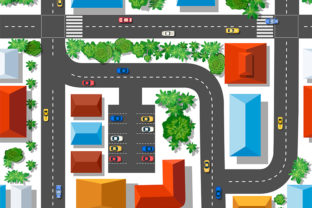
Seamless repeating pattern is a design technique that allows for the creation of continuous, uninterrupted visual elements. In the context of urban design, this concept becomes particularly relevant when creating top views of plan cities. These patterns are not just aesthetically pleasing; they serve functional purposes by enabling designers to represent complex urban environments in a structured and scalable manner.
The Concept of Seamless Repeating Pattern
A seamless repeating pattern is a design element that can be tiled without visible seams or gaps. This means that the pattern can be repeated infinitely in all directions while maintaining its integrity. In urban planning, this technique is used to create detailed and accurate representations of city layouts, including streets, buildings, and natural features like trees and green spaces.
The key characteristic of a seamless repeating pattern is its ability to maintain consistency across large areas. This makes it an invaluable tool for architects, urban planners, and designers who need to visualize and communicate their ideas effectively. The pattern's repetition allows for the efficient use of space and resources, making it a practical choice for both small-scale projects and large urban developments.
Key Characteristics and Purpose
- Consistency: A seamless repeating pattern ensures that every element is uniform and aligned, which is crucial for creating a cohesive visual representation.
- Scalability: The pattern can be expanded or contracted to fit different project sizes, making it highly adaptable.
- Efficiency: By using a repeating pattern, designers can save time and effort in creating detailed urban layouts.
- Clarity: The repetition helps in clearly defining the structure and organization of the cityscape, making it easier for stakeholders to understand and engage with the design.
The purpose of using a seamless repeating pattern in urban design goes beyond aesthetics. It serves as a practical solution for representing complex environments in a simplified yet accurate manner. This approach is especially useful when creating top views of plan cities, where the goal is to convey spatial relationships and urban infrastructure effectively.
Strengths and Practical Value
One of the primary strengths of a seamless repeating pattern is its ability to simplify complex designs. By breaking down the city layout into manageable segments, designers can focus on individual elements while ensuring overall coherence. This method is particularly beneficial for large-scale projects where maintaining detail across vast areas is challenging.
Additionally, the use of a seamless repeating pattern enhances the usability of design tools and software. Many digital platforms offer templates and tools that support the creation of such patterns, allowing users to generate high-quality visuals with relative ease. This accessibility makes the technique more appealing to professionals and hobbyists alike.
The flexibility of seamless repeating patterns also contributes to their practical value. Whether designing a small neighborhood or a sprawling metropolis, the same principles apply. This adaptability ensures that the technique remains relevant across various contexts and scales of urban development.
Real-World Applications and Limitations
In real-world applications, seamless repeating patterns have been successfully used in a variety of urban design scenarios. For instance, city planners often employ these patterns to create detailed maps and models that help in decision-making processes. Similarly, architects use them to visualize building layouts and street networks, ensuring that each component fits seamlessly within the larger urban fabric.
However, it is important to acknowledge the limitations of this technique. While seamless repeating patterns provide a structured approach to design, they may not always capture the nuances of real-life environments. Urban landscapes are inherently dynamic, and static patterns may fail to represent the complexity and variability of actual cityscapes. Therefore, it is essential to balance the use of patterns with other design methodologies that allow for greater flexibility and adaptability.
Who Benefits Most from Seamless Repeating Pattern?
The benefits of a seamless repeating pattern extend to a wide range of professionals and enthusiasts. Architects and urban planners are among the primary beneficiaries, as they rely on these patterns to create accurate and scalable representations of their designs. Additionally, educators and students in architecture and design programs find this technique invaluable for learning and practicing spatial visualization skills.
Freelancers and small business owners who work in creative fields may also benefit from using seamless repeating patterns. These patterns can enhance the visual appeal of their projects while ensuring consistency and efficiency in their workflow. Moreover, bloggers and content creators can leverage these patterns to illustrate urban concepts in a clear and engaging manner, thereby improving audience engagement and understanding.
Professional Observations and Recommendations
From a professional standpoint, seamless repeating patterns offer a reliable and effective solution for representing urban environments. However, it is crucial to consider the specific needs and goals of each project before implementing this technique. For instance, projects requiring a high degree of customization may benefit from alternative approaches that allow for greater flexibility.
It is also advisable to explore a combination of techniques that complement the use of seamless repeating patterns. Integrating these patterns with other design methods can help achieve a more comprehensive and realistic representation of urban landscapes. This hybrid approach ensures that the strengths of each technique are utilized effectively, resulting in a more robust and versatile design process.
Ultimately, the decision to use a seamless repeating pattern should be based on the specific requirements of the project, the target audience, and the desired outcome. By carefully evaluating these factors, designers can determine whether this technique aligns with their goals and workflows, ensuring that their work is both effective and impactful.